
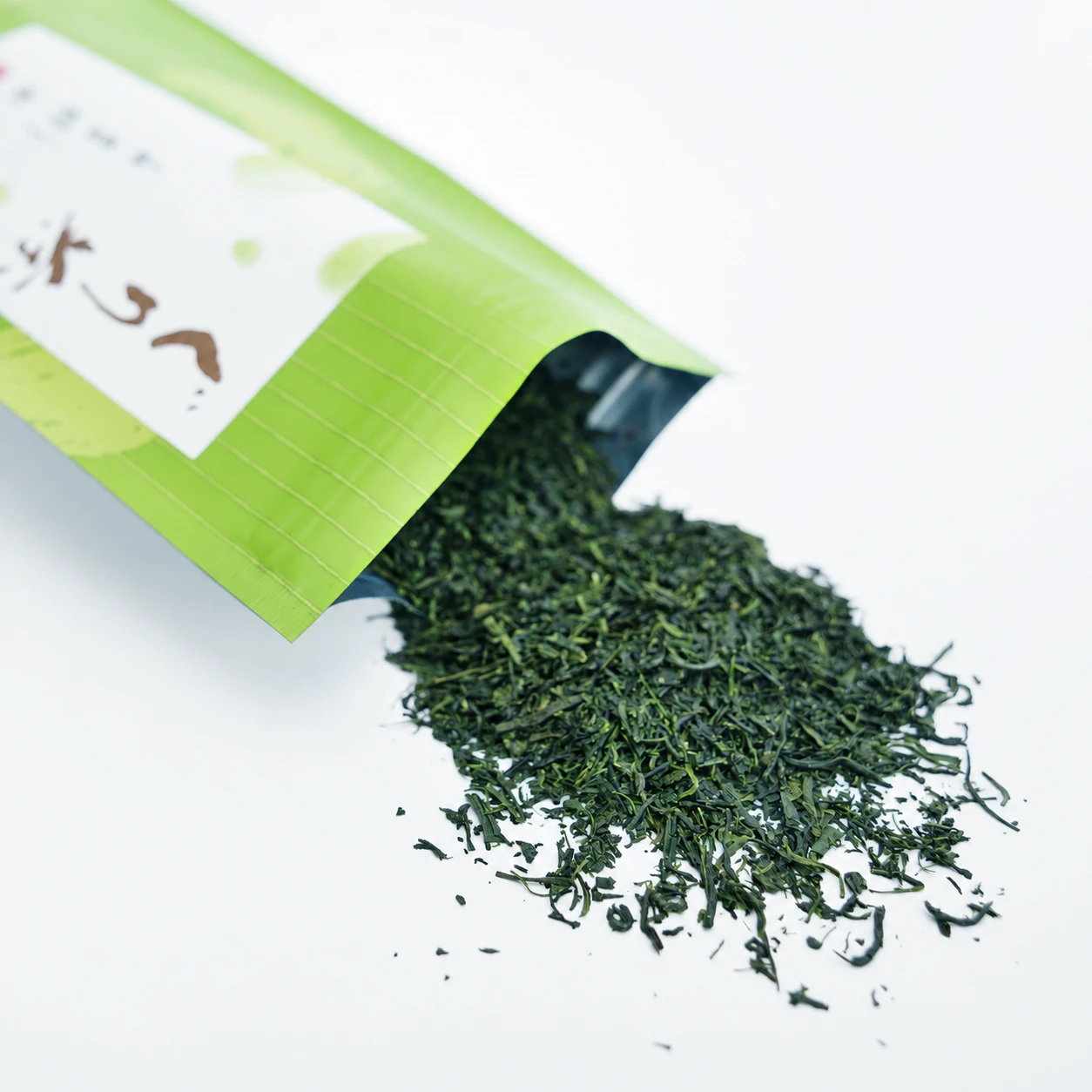
Guricha is a type of green tea.
Its formal name is mushisei tamaryokucha: steamed tamaryokucha. Like sencha and gyokuro, it belongs to the Japanese green-tea family. “Guricha” is a familiar name used in Izu and elsewhere, not the name of a tea-plant cultivar.
Tamaryokucha accounts for about 2% of Japan’s unrefined tea production. It is produced in much smaller quantities than sencha or tencha, the tea leaves used to make matcha. Here in Ito on the Izu Peninsula, we specialize in Guricha.
Manufacturing method
Guricha and sencha differ in whether they undergo seiju, the precision-rolling stage that shapes leaves into straight needles.
Steaming time
Light, medium and deep steaming describe how long the leaves are steamed. Guricha can be made with different degrees of steaming.
Sugiyama’s choice
Our Guricha combines the steamed tamaryokucha method with deep steaming.
Where Guricha and sencha differ
| Compare | Guricha | Sencha |
|---|---|---|
| Final shaping | Skips seiju; uses saikan re-drying. | Uses seiju precision rolling. |
| Leaf appearance | Twisted and irregular; varies with steaming. | Thin, straight needles; deep-steamed sencha also contains fine particles. |
| Deep steaming | Can be deep-steamed. | Can also be deep-steamed. |
Leaf shape alone does not determine flavor. Cultivar, cultivation, steaming, final firing and blending also matter.
Tamaryokucha may be steamed or pan-fired. Sugiyama’s Guricha is the steamed type.
From steaming to drying
Guricha and sencha share the first four steps. The processes then diverge before the final drying stage produces aracha, the tea that will later be blended and finished.
-
01 · Steaming
Steam the fresh leaves.
-
02 · Primary rolling (soju)
Roll and dry the leaves with warm air.
-
03 · Rolling (junen)
Apply pressure to roll the leaves and even out their moisture.
-
04 · Intermediate rolling (chuju)
Continue rolling while reducing moisture.
↓ The paths divide here: with or without precision rolling.
Guricha · Steamed tamaryokucha
No seiju → Re-drying
-
Re-drying (saikan)
Leaves move inside a rotating drum, drying and developing Guricha’s characteristic twisted shape.
-
Drying
Warm air reduces remaining moisture to produce aracha.
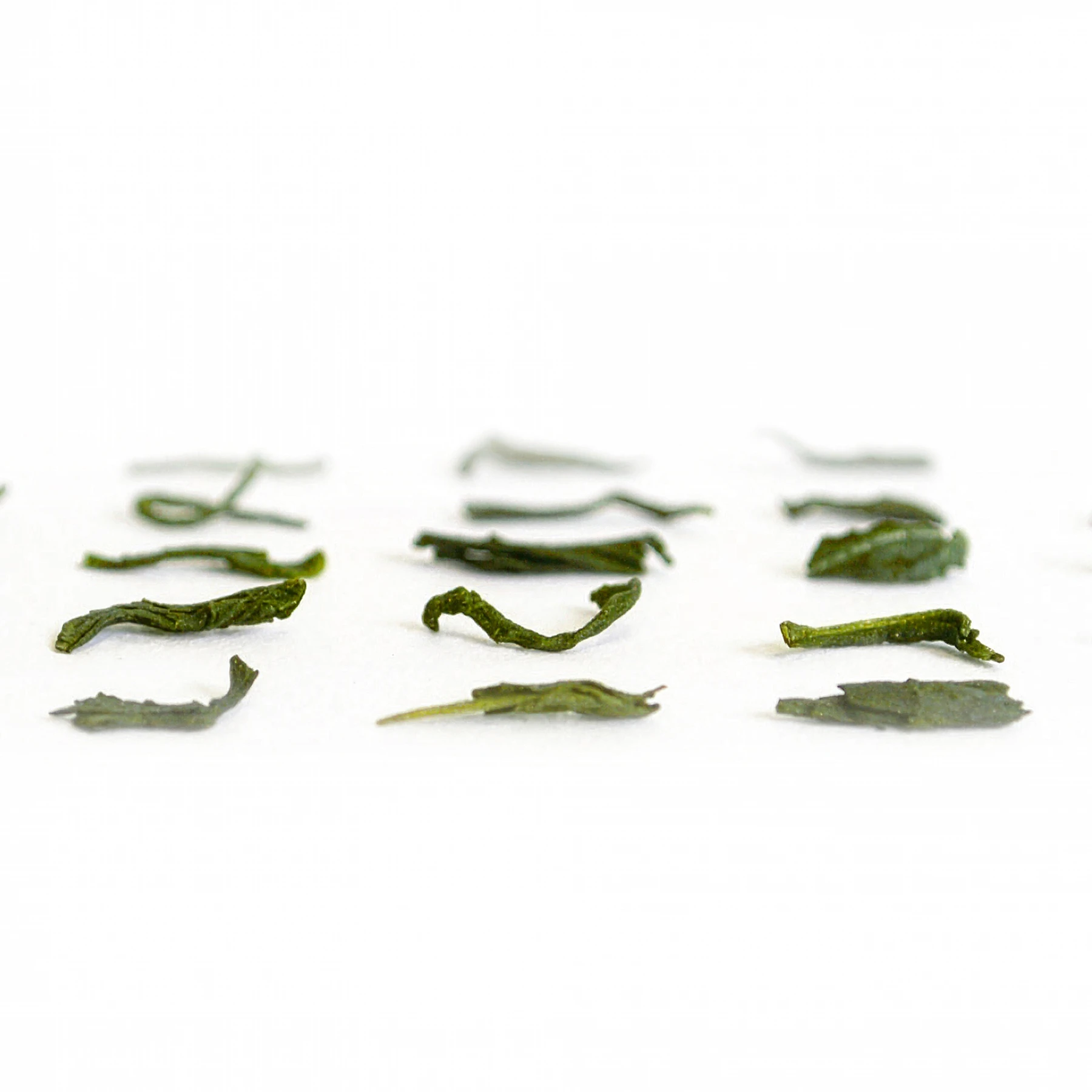
A twisted, irregular leaf shape
Skipping seiju is the defining manufacturing feature of Guricha. Instead of being pressed into straight needles, the leaves pass through saikan.
This difference contributes to the tea’s character as well as its shape. Sugiyama also uses deep steaming, shade-grown and sun-grown leaves, blending and final firing to create mellow umami and body.
Sencha
Seiju → Straight, slender leaves
-
Precision rolling (seiju)
Pressure and rolling shape the leaves into thin, straight needles.
-
Drying
Warm air reduces remaining moisture to produce aracha.
A needle-like leaf shape
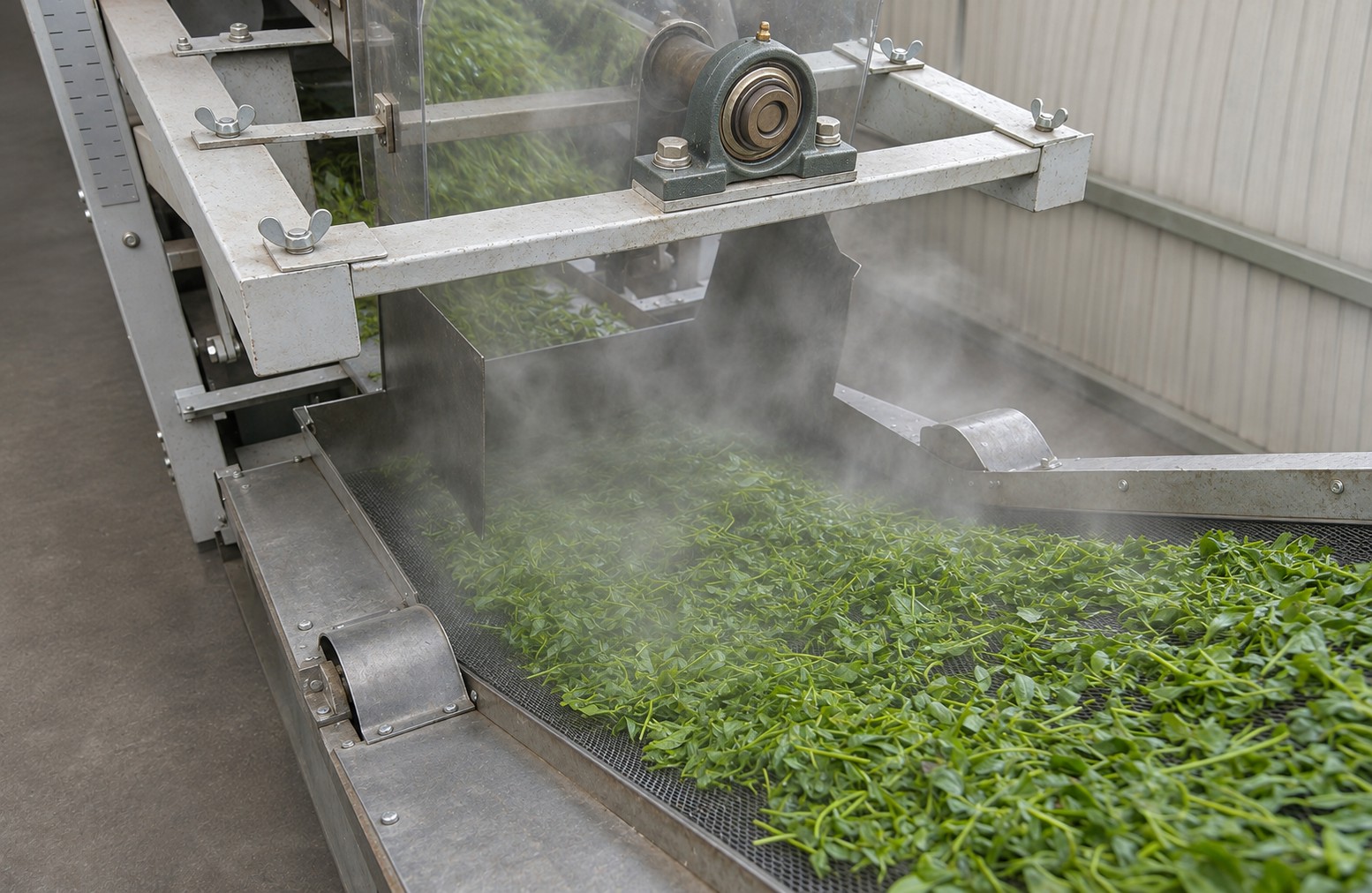
Sugiyama’s Guricha is deep-steamed.
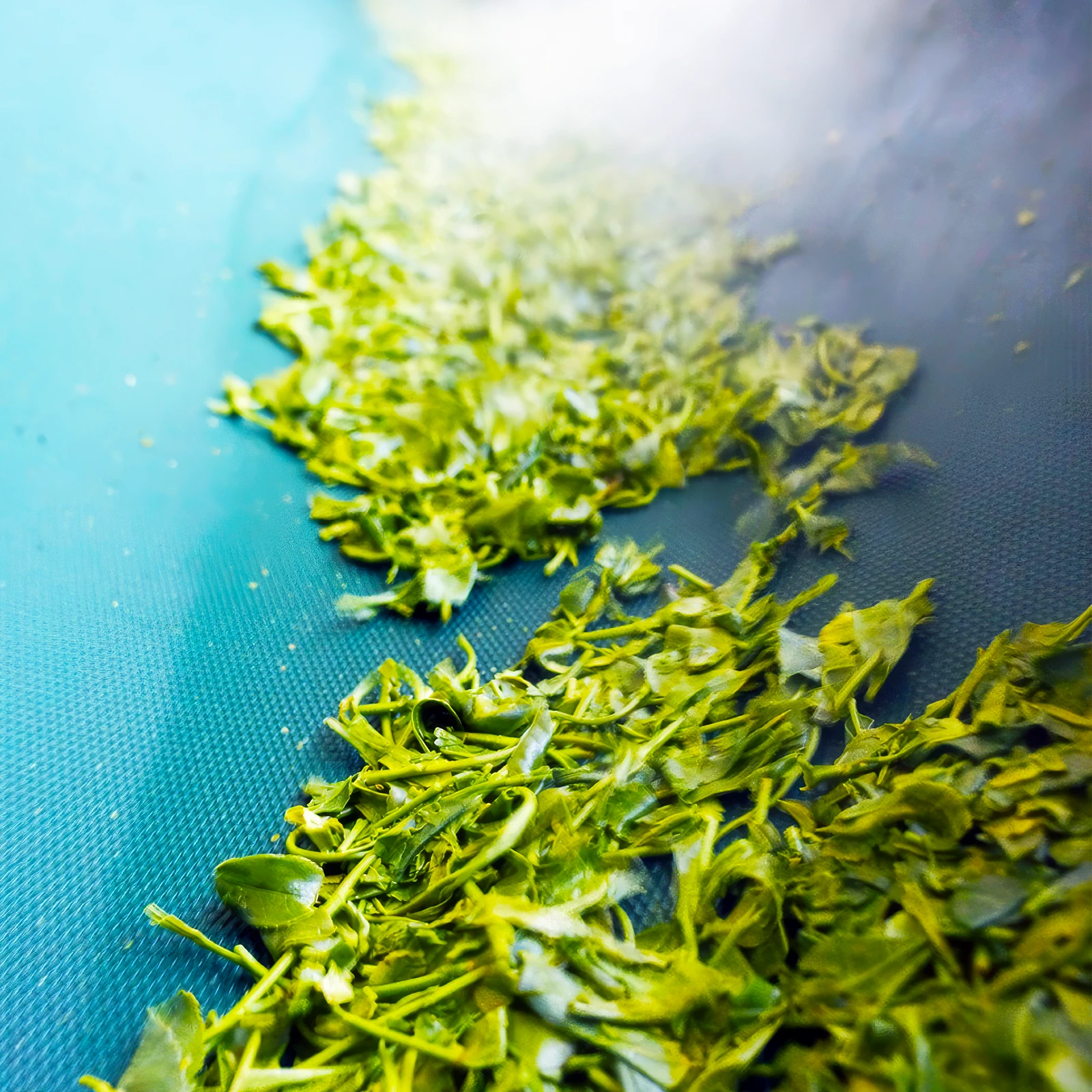
Longer steaming softens the leaves and makes fine particles more likely. Our Guricha brews to a deep green and has a mellow, smooth taste.
Deep-steamed leaves are not uniformly round. They include twists, small fragments and fine particles. More lightly steamed Guricha may retain more visibly curved leaves. Enjoy the aroma, umami and color of the brewed tea, rather than uniformity of shape.
Deep steaming and our own blend
The sweetness of shaded tea and the refreshing aroma of sun-grown tea each have a role in our blends. Tea selection, cultivation, steaming, blending and final firing work together to create Sugiyama’s mellow flavor.
Questions about Guricha
Is Guricha different from green tea?
It is a type of green tea, formally called steamed tamaryokucha.
Are Guricha and deep-steamed tea separate kinds?
They describe different things: the manufacturing method and the degree of steaming. Sugiyama’s Guricha is deep-steamed tamaryokucha.
Are all Guricha leaves round?
No. Deep-steamed Guricha includes twisted leaves and fine particles.